
Crypto Price Prediction
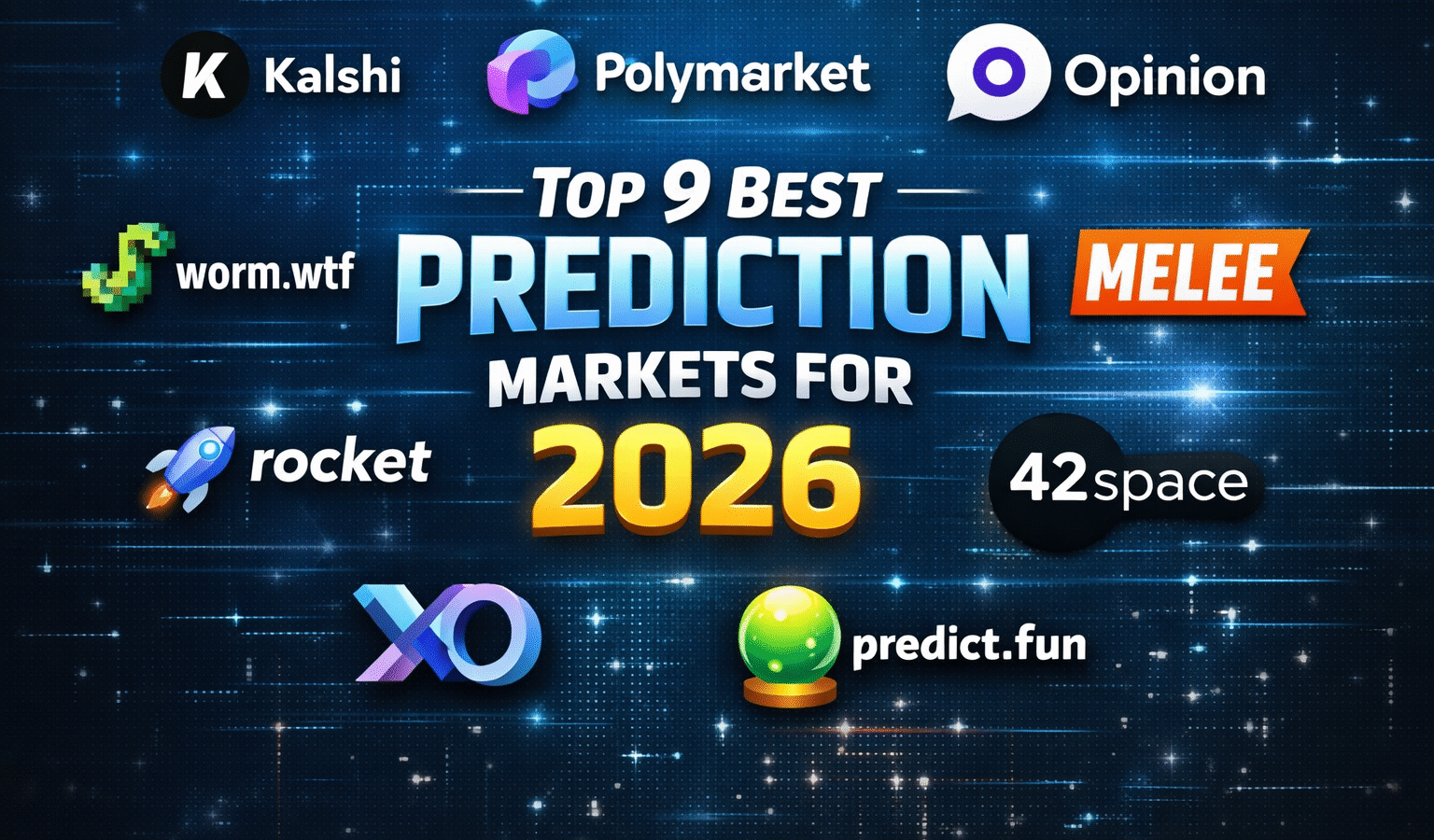

I trade Polymarket crypto up/down markets almost every day and build AI probability tools for prediction markets at Crypticorn. When people ask for the "best" prediction market in 2026, they usually want a single name. There isn't one. Kalshi wins on US regulation and fiat rails. Polymarket wins on global liquidity, especially short-horizon crypto. Predict.fun wins on capital efficiency if you hold positions for days. The rest of this list is honest tiering, not a hype ranking.
Last updated: August 2026. Not financial advice.
Cluster hub: Part of our AI crypto price predictions complete guide (2026).
Direct Answer
The best crypto prediction markets in 2026 depend on jurisdiction and holding period. For active crypto up/down trading, Polymarket still has the deepest books on 15-minute and 1-hour BTC/ETH markets, even after 2026 taker fees. For US residents who need a regulated venue, Kalshi is the practical choice. For longer-dated positions where idle collateral hurts, Predict.fun (yield via Venus on BNB Chain) is the standout challenger. No platform gives you edge by itself. Liquidity, fees, and resolution rules change the math; your probability estimate still decides outcomes.
Key Takeaways
- There is no universal #1. Kalshi and Polymarket dominate volume; everything else is niche or experimental.
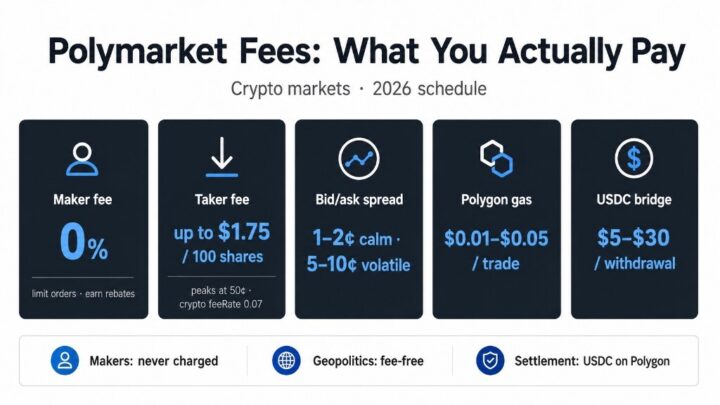
- Polymarket's 2026 taker fees changed the math (crypto feeRate 0.07, up to ~$1.75 per 100 shares at 50¢; makers still free). Spread depth often matters more than the fee line item.
- Predict.fun is real traction, not vapor. Launched December 2025, BNB Chain/USDT, UMA resolution, collateral yield via Venus. See our full Predict.fun vs Polymarket comparison.
- Kalshi is the regulated US route with USD banking and CFTC DCM status. Crypto hourly markets exist, but check liquidity vs Polymarket before you assume parity.
- Challengers (Limitless, Opinion, Hyperliquid HIP-4) win on specific chains or durations, not overall depth.
- Augur and permissionless experiments remain intellectually important but thin for size.
- Geo-restrictions are real. Verify eligibility before you fund anything. I am not your lawyer.
How I Built This List (and What I Ignored)
I did not sort by VC funding rounds or Twitter hype. I ranked platforms by whether a serious trader can actually enter, exit, and get paid on crypto-linked or macro event contracts in 2026.
That means liquidity, fee structure (including spread), resolution clarity, and whether the product is live today. Startups with pretty decks but no book depth didn't make the cut. Neither did pure forecasting communities with no real-money settlement, they are useful, but they are a different product.
Primary references I cross-checked: Polymarket fee docs, our live-tested Polymarket fees breakdown, Polymarket vs Kalshi notes, and Predict.fun's public product pages. Volume figures move weekly; treat billion-dollar headlines as directionally true, not gospel.
Comparison At a Glance
| Platform | Best for | Settlement | 2026 fee reality | Crypto up/down depth |
|---|---|---|---|---|
| Polymarket | Global traders, short-horizon crypto | Polygon / USDC, self-custody | Taker fees on crypto (makers free); spread + gas still apply | Deepest for 15m/1h BTC/ETH |
| Kalshi | US-regulated, USD, macro/sports/crypto hourly | Centralized USD account | Formula taker fees (similar shape to Polymarket at mid prices) | Good and improving; check spread before size |
| Predict.fun | Yield on open collateral, easy onboarding | BNB Chain / USDT | Low taker fees, sponsored gas per their docs | Thinner books; wider spreads on fast markets |
| Limitless Exchange | Short-duration crypto on Base | Base / on-chain | Platform fee schedule varies by market type | High market count, variable depth per pair |
| Opinion (Opinion Labs) | Macro/structural BNB-native forecasting | BNB Chain | Lower headline fees; liquidity varies | More macro than pure up/down scalping |
| Hyperliquid (HIP-4) | Traders already on Hyperliquid | On-chain perps ecosystem | Protocol-specific; compare to HL trading costs | Ecosystem-native, not Polymarket-depth |
| Augur | Decentralized purists, long-tail markets | Ethereum L2 history / legacy liquidity | On-chain gas + thin books | Not where I go for 15-minute BTC |
| XO Market | Permissionless market creation | XO Chain (experimental) | Low headline fees; fragmentation risk | Niche; liquidity splits across custom markets |
| Myriad Markets | Sui ecosystem users | Sui / on-chain | Early-stage fee models | Watchlist tier, not my daily driver |
1. Polymarket
Still the reference platform for crypto prediction markets. I live in the 15-minute and 1-hour BTC/ETH UP/DOWN books because that is where my strategies actually fill.
What changed in 2026: Polymarket is not "0% fees" for crypto takers anymore. The fee formula peaks near 50¢ entries. Makers still pay nothing and can earn rebates. The full math is in our Polymarket fees guide.
Best for: global crypto up/down traders who need depth.
Watch out for: spread widening in volatility, US geo restrictions, bridge/withdrawal friction on Polygon.
2. Kalshi
Kalshi is the CFTC-regulated US event-contract exchange. USD in, USD out, KYC, tax reporting infrastructure. For US readers who cannot or will not use offshore crypto rails, this is the adult table.
Kalshi runs crypto-linked hourly markets now. I compare execution to Polymarket in our head-to-head write-up. Short version: regulation and banking win; absolute crypto book depth often still favors Polymarket.
Best for: US residents, macro/econ/sports, institutions that need a DCM.
Watch out for: jurisdiction limits, fee stack on high turnover, thinner global tail markets.
3. Predict.fun
The fastest credible challenger if you read crypto Twitter in 2026. Same skeleton as Polymarket (order book, conditional tokens, UMA oracle), different bet: collateral earns yield through Venus while the position is open.
That matters on multi-day holds. It barely matters on a 15-minute BTC market. Onboarding is easier (email/social login, sponsored gas per their marketing). Volume since launch is real, but books are thinner than Polymarket's on fast crypto contracts.
Best for: longer-dated event traders, BNB ecosystem users, beginners who need simpler funding.
Watch out for: Venus smart-contract risk stacked on prediction risk; spread on short markets.
4. Limitless Exchange
Base-chain venue pushing short-duration crypto markets at high cadence. Useful if you already live on Base and want hourly-style exposure without bridging to Polygon.
Liquidity is uneven market by market. I treat Limitless as a laboratory with real money, not a Polymarket replacement.
Best for: Base natives, short-horizon experimenters.
Watch out for: per-market depth; newer oracle/resolution edge cases.
5. Opinion (opinion Labs)
BNB Chain platform angled at macro and structural forecasting, not viral meme markets. Less flash, more "what happens to rates, growth, or policy over quarters."
If your edge is macro reasoning rather than 15-minute tape reading, Opinion belongs on the shortlist. If you want BTC up/down scalping, look elsewhere first.
Best for: macro thinkers, BNB Chain users.
Watch out for: slower markets, smaller trader community vs Polymarket/Kalshi.
6. Hyperliquid (hip-4 Prediction Markets)
Hyperliquid added prediction-market style contracts inside an ecosystem traders already use for perps. The win is unified collateral and workflow if you are a Hyperliquid native.
The tradeoff is ecosystem lock-in and a different liquidity culture than standalone prediction venues.
Best for: existing Hyperliquid power users.
Watch out for: not automatically deeper than Polymarket on mainstream crypto events.
7. Augur
Augur is the OG decentralized prediction market story. Historically important, philosophically aligned with "no central operator," and often thin on liquidity for the contracts I care about.
I mention it because people still search "decentralized prediction market" and land on Augur threads. For practical 2026 crypto trading, it is a heritage platform, not my first click.
Best for: long-tail decentralized markets, researchers.
Watch out for: slippage, slow resolution disputes, low active trader count on many markets.
8. Xo Market
Permissionless market creation: anyone can spin up a question, which means long-tail coverage and liquidity fragmentation in the same breath.
Great for experiments and community conviction markets. Harder for size. Quality control is your job as a trader.
Best for: niche questions, creators who bring their own crowd.
Watch out for: empty books, ambiguous resolution wording on user-created markets.
9. Myriad Markets
Sui-ecosystem prediction market play. Early compared to Polymarket/Kalshi, but worth tracking if your stack is already on Sui.
I keep Myriad on a watchlist, not in my daily rotation.
Best for: Sui natives exploring on-chain events.
Watch out for: immature liquidity vs tier-one venues.
Who Should Use Which (honest Verdict)
- Short-horizon crypto up/down (my lane): Polymarket first. Kalshi second if you are US-only and their crypto books fill. Predict.fun only if you accept wider spreads.
- US regulated, fiat-only: Kalshi. Full stop for compliance-sensitive users.
- Multi-day event positions: split between Polymarket (liquidity) and Predict.fun (collateral yield). Run the numbers on yield vs spread.
- Chain-maximalist (Base/Sui/BNB): Limitless, Myriad, Opinion, Predict.fun respectively. Convenience is real; depth may not be.
- Research, not trading: read market-implied probabilities on Polymarket/Kalshi even if you do not trade size.
Whichever venue you pick, the hard part is the same: estimate probability better than the mid price. That is what we build at Crypticorn: AI up/down probabilities and the Prediction Dashboard for longer horizons. The platform changes your costs. It does not change whether you have edge.
Faq: Best Crypto Prediction Markets (2026)
What is the best crypto prediction market in 2026?
For most international crypto traders, Polymarket still offers the deepest liquidity on short-horizon BTC/ETH up/down markets. US users who need a regulated fiat venue typically default to Kalshi. Predict.fun is the main challenger if collateral yield and BNB Chain onboarding matter more than absolute book depth. "Best" is a function of jurisdiction, holding period, and whether you can get filled at a fair spread.
Is Polymarket still fee-free?
Not for crypto takers. Polymarket introduced taker fees in 2026 (crypto feeRate 0.07, peaking around $1.75 per 100 shares near 50¢). Makers still trade free and can earn rebates. Spread, Polygon gas, and bridge costs remain on top. See the 2026 fee breakdown for worked examples.
Is Kalshi or Polymarket better for Bitcoin predictions?
Kalshi wins on US regulation and USD funding. Polymarket wins on global access and, in my experience, tighter short-horizon crypto books. Kalshi hourly crypto markets are usable, but compare spreads side by side before you assume equivalent execution. Our Polymarket vs Kalshi article walks through the differences.
What is Predict.fun and should I use it?
Predict.fun is a BNB Chain prediction market (USDT collateral, UMA resolution) that routes open-position collateral through Venus Protocol to earn yield. It launched in December 2025 and has meaningful volume, but thinner books than Polymarket on fast crypto markets. Use it when yield on multi-day holds matters; use Polymarket when liquidity on 15-minute markets matters.
Are decentralized prediction markets like Augur still relevant?
Historically yes, practically limited. Augur pioneered on-chain prediction markets, but liquidity for mainstream crypto contracts concentrates on Polymarket, Kalshi, and newer CLOB venues. Augur remains relevant for research and long-tail decentralized markets, not for the kind of high-frequency crypto up/down trading I do daily.
Can US residents use Polymarket or Predict.fun?
Both platforms geo-restrict US users in their terms. US traders who need legal clarity typically use Kalshi or other CFTC-regulated products. Rules change and vary by state. Verify your own eligibility before depositing funds anywhere.
How do prediction markets relate to AI crypto price prediction?
Prediction markets show crowd-implied probabilities on events (including crypto direction). AI price models estimate probabilities from data (price, volume, sentiment). They answer different questions but can be combined: compare your model's probability to the market mid before you trade. Our AI crypto price prediction explainer covers the distinction.
Final Takeaway
- Tier 1 for serious size: Polymarket (global crypto depth) and Kalshi (US regulation).
- Tier 2 challengers: Predict.fun (yield + onboarding), Limitless and Opinion (chain-specific strengths).
- Tier 3 experimental: Hyperliquid HIP-4, Augur, XO, Myriad. Real products, niche liquidity.
- 2026 fee reality: taker fees on major venues mean maker limits and spread awareness matter more than headline "0% fees" marketing.
- No platform replaces edge. Probability estimation and sizing still decide outcomes.
Author: Johannes Thüroff, M.Eng. | Last updated: August 2026
Not financial advice. See Disclaimer.
Automate crypto prediction markets
New to crypto trading?
Further reading
Crypto Price Prediction
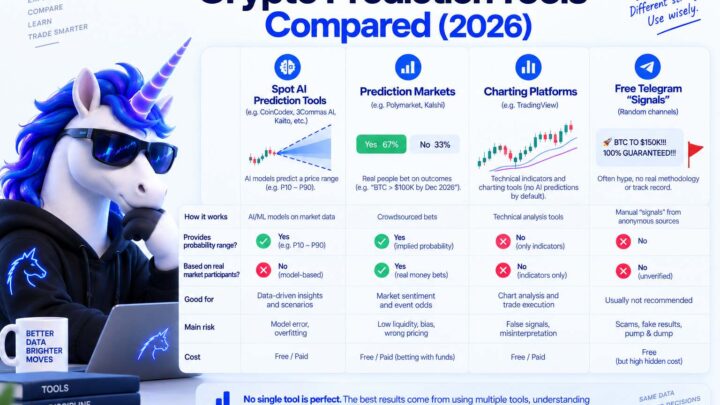
Crypto Prediction Tools Compared (2026): Platforms, Aggregators, and What to Avoid
Crypto Price Prediction
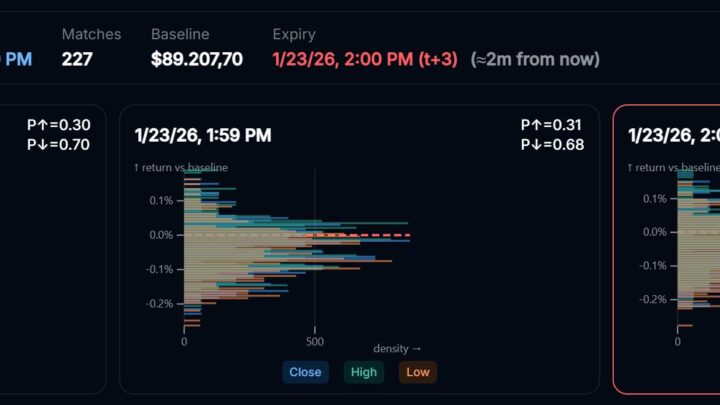
Polymarket Crypto Price Predictions: Crowd Odds vs AI Forecasts (2026)

Crypto Price Prediction
How Accurate Are AI Crypto Price Predictions? (2026)
Crypto Trading
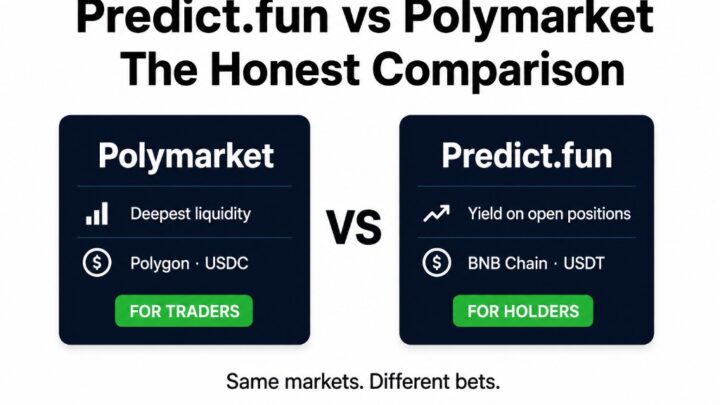
Predict.fun vs Polymarket: The Honest Comparison (2026)
Crypto Trading
Ultimate Guide to Polymarket Crypto Trading (2026)
Crypto Trading