
Crypto Trading
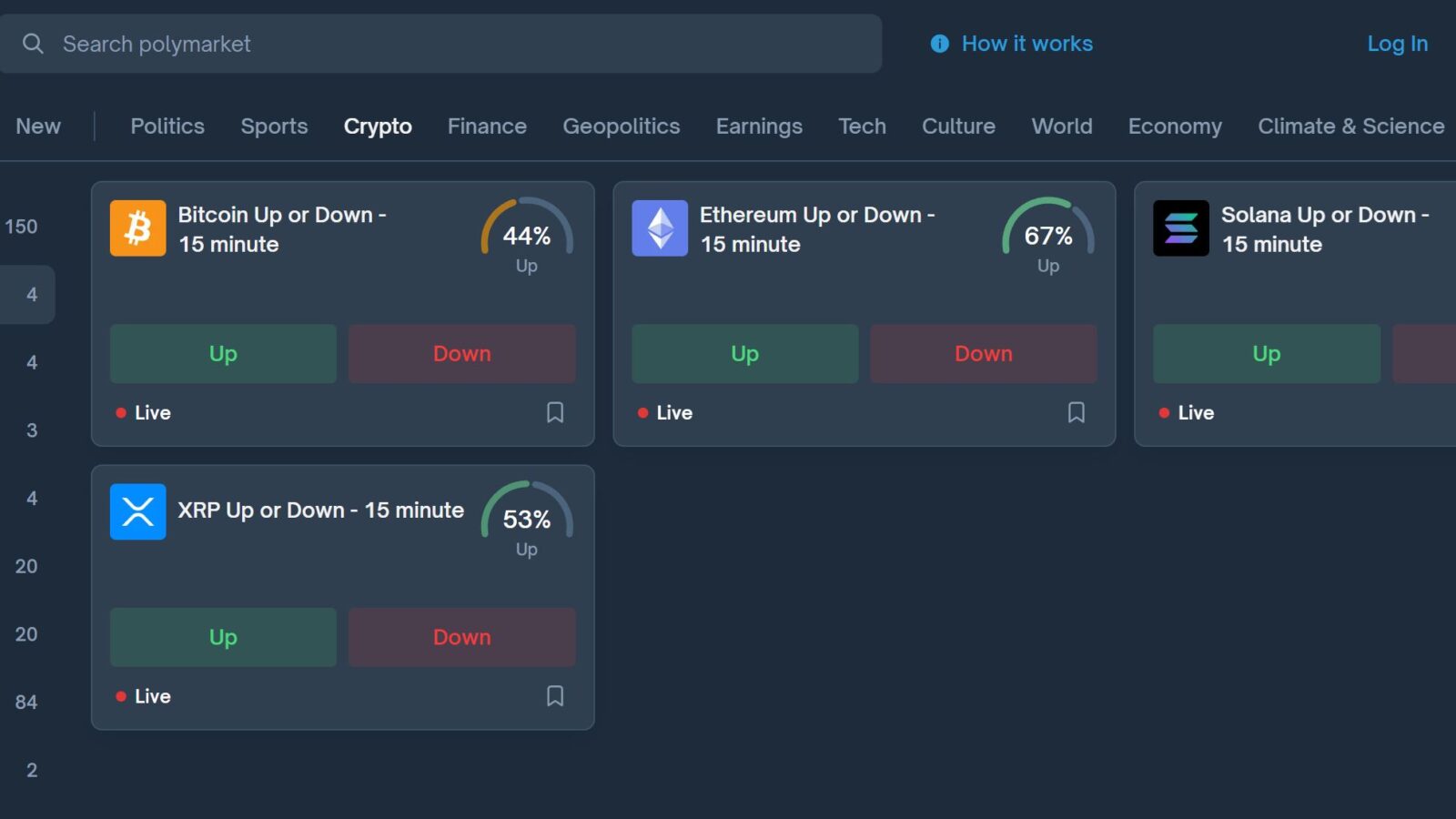
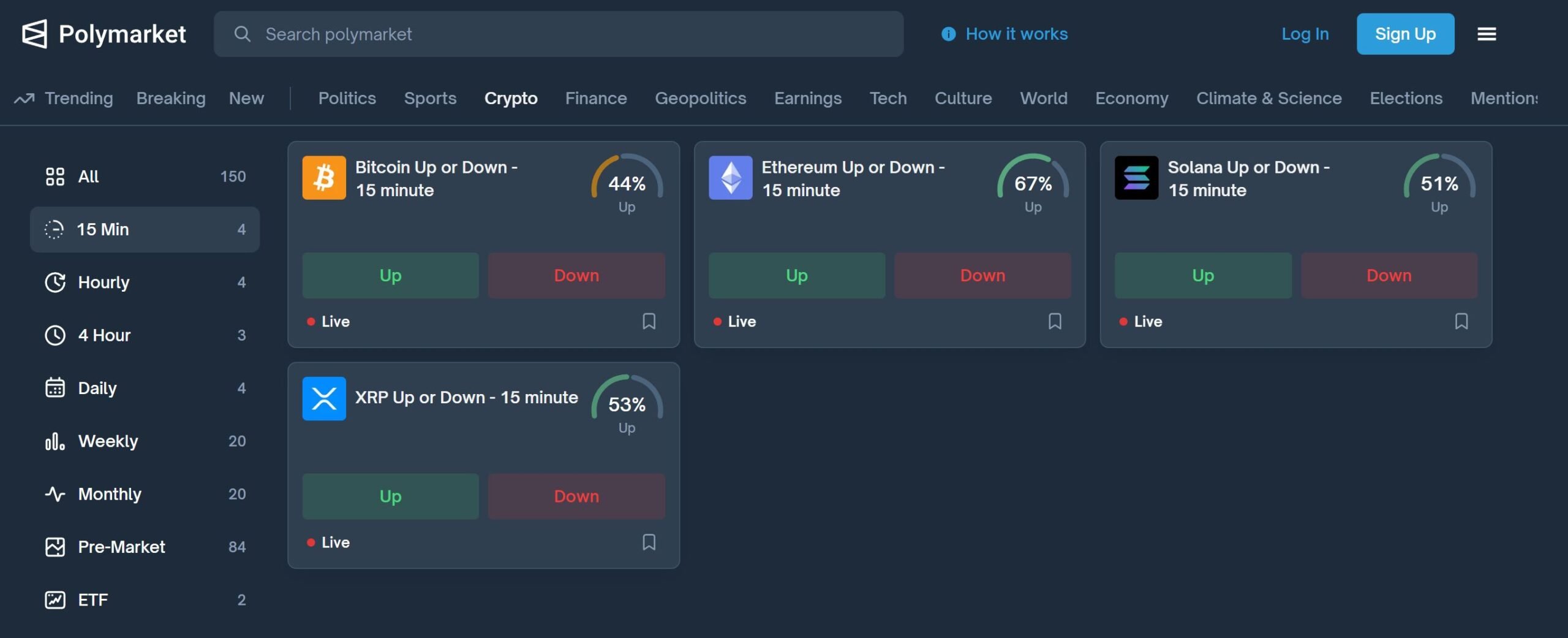
How to win on Polymarket Bitcoin UP/DOWN is not a direction trick. Most people who lose were right about Bitcoin and still paid for a bad process: the wrong window, a position that was too big, a chase after the odds had already moved, or doubling down to "get it back."
I'm Johannes Thüroff, M.Eng. I trade Polymarket 15-minute and 1-hour BTC UP/DOWN markets almost every day, and I built Crypticorn's up/down tooling because I got tired of making those mistakes by hand. This is the framework I use. The 5-minute entry rule is one piece of it, not the whole thing. Last updated: August 2026. Not financial advice.
Direct Answer
Winning on Polymarket Bitcoin UP/DOWN means running a process with positive expectancy, not calling the next candle. Pick a horizon you can actually sit through (I use 15-minute and 1-hour BTC, not every coin on the board), skip most windows, size so one loss is boring, never double down after a loss, and treat timing as a separate rule, wait out the open, don't chase odds that already repriced. You can be right on Bitcoin and still lose if you buy 70–80¢ after the move. Most 15-minute markets have no trade. Skipping is a position.
Key Takeaways
- Winning is a process, not a prediction. Direction is one input. Market, size, skip-rate, and whether you chase already-moved odds decide the account.
- Timing is one module. The open of a 15-minute market is noise. The full entry/exit rule lives in my Polymarket 5-minute strategy, this page does not re-teach it.
- High odds are not a safe trade. 70–80¢ early usually means the move already happened and you are the exit.
- Size so one loss does not matter. A $10 buy at 50¢ is 20 shares. A wrong 15-minute entry rides to resolution, there is no stop in the spot-trading sense.
- Do not martingale. A 6-loss streak is not rare enough to "make it back" by doubling. I wrote the math in the martingale article.
What "winning" on Polymarket Actually Means
Winning on Polymarket Bitcoin UP/DOWN is not a 90% hit rate. It is finishing a month with more money than you started, after fees and after the losses you will take.
A 55% win rate with wins that are larger than losses beats a 70% win rate where every win is 10¢ and every loss is 50¢. That is the part Twitter skips.
You can be right about Bitcoin and still lose on Polymarket.
If BTC is going up and you buy UP at 78¢ because "it's obviously up," the market already agrees with you. The remaining 22¢ is not a gift. It is what you get paid if nothing goes wrong for the rest of the window, and plenty goes wrong in 15 minutes.
I learned this the expensive way in 2025 on a small test account: a week of "correct" BTC calls and a smaller balance. The calls were fine. The entries were late, the size grew after losses, and I treated every window as mandatory. That is not a strategy. That is a leak.
Why Being Right on Bitcoin Still Loses
Polymarket UP/DOWN shares pay $1 if you are right and $0 if you are wrong. The price of the share is the crowd's implied probability. I unpacked the mechanics in how Polymarket's Bitcoin odds actually work.
The practical version:
- Buy UP at 50¢ → you need BTC to finish up. You risk $0.50 to make $0.50.
- Buy UP at 75¢ → you still need BTC to finish up. You risk $0.75 to make $0.25.
- Same direction. Completely different trade.
Late entries at already-repriced odds are how people "call it right" and still bleed. The 5-minute article covers when I wait. This page's job is to say: if the odds already moved, you do not have a "win Polymarket" setup. You have a hope trade.
Pick the Right Market before You Pick up or Down
How to win on Polymarket starts before the UP/DOWN click. The board shows 15-minute, hourly, 4-hour, and daily BTC (and a pile of other coins). They are not the same game.
| Horizon | What it actually is | Who it fits |
|---|---|---|
| 15-minute BTC | Open noise, then a short remainder. 96 windows a day. Most are untradeable. | Traders who can sit the open and skip aggressively. This is what I trade most. |
| 1-hour BTC | Slower, still mean-reverts, fewer forced entries. | If 15 minutes feels like a slot machine. I use this when 15-minute chop is garbage. |
| 4-hour / daily | Closer to a directional view. Overnight and news risk show up. | Not my default. A "I think BTC is going up today" opinion belongs here, not in a 15-minute window. |
I compared 15-minute vs 1-hour in detail in 15-minute vs 1-hour crypto markets on Polymarket. The short version: if you keep getting chopped in 15-minute windows, moving to 1-hour is a process change, not a personality flaw.
I also do not spray ETH, SOL, and XRP 15-minute markets just because they are on the same screen. Liquidity, my models, and my attention are BTC-first. Trading four coins at once is how "how to win" turns into "how to overtrade."
Timing Is One Piece, Not the Whole Game
The first minutes of a 15-minute BTC market are bots, late emotional money, and moves that go too far. Entering at the open is the most common way to donate.
That is a real edge. It is also not a complete answer to "how to win on Polymarket."
If I put the full 5-minute entry and exit rules here, this page and the 5-minute strategy article would be the same article. Google already treats them that way. So the split is deliberate:
- This page: the framework, market, skip-rate, size, no martingale, don't chase repriced odds.
- That page: the mechanical 15-minute timing rule I actually use (observe the first 5 minutes, enter only on a held direction, exit rules, when I sit out).
If your only takeaway from this article is "wait a few minutes," go read the 5-minute piece. If your takeaway is "I should trade every window once I have a timing rule," you missed the point.
Size so One Loss Is Boring
Short-horizon UP/DOWN has no stop-loss in the futures sense. A wrong entry rides until resolution. That makes size the difference between a process and a blown account.
A concrete example: $10 at 50¢ is 20 shares. Lose, and you are down $10. Double the next one to "get it back," lose again, and you are down $30. That spiral is how small accounts die on a market that looks like a coin flip.
I size off a fraction of Kelly, not off the last result. The worked numbers for Polymarket and Kalshi are in position sizing on Polymarket and Kalshi. The rule I will not break: if a single 15-minute loss would change how I trade the next window, the position was too big.
Do Not Double Down to Win It Back
Martingale looks like a how-to-win strategy because the first few doubles "work." Then one streak does the account.
A 6-loss streak on a fair-ish coin is about 1.6%. That is not a black swan. It is a bad week. Recovering a $10 start by doubling through that streak is hundreds of dollars of risk for $10 of "win." I ran the table in Polymarket martingale: why doubling down blows up.
If your plan to win on Polymarket requires the next trade to be larger because the last one lost, you do not have a plan. You have a fuse.
Skip Most Windows
There are 96 fifteen-minute BTC windows in a day. I do not need 96 opinions.
Low-volatility grind, a window sitting on a Fed speaker or CPI print, and tight chop with no held direction are automatic skips. So is "I already lost two in a row and I feel like I should be in the market." That last one is how most traders lose on Polymarket, not because the platform is rigged.
Selectivity is the strategy. A day with three trades and a flat day with zero trades can both be correct. Overtrading is the silent leak because it does not look like a mistake while you are doing it.
Costs Are Part of the Process
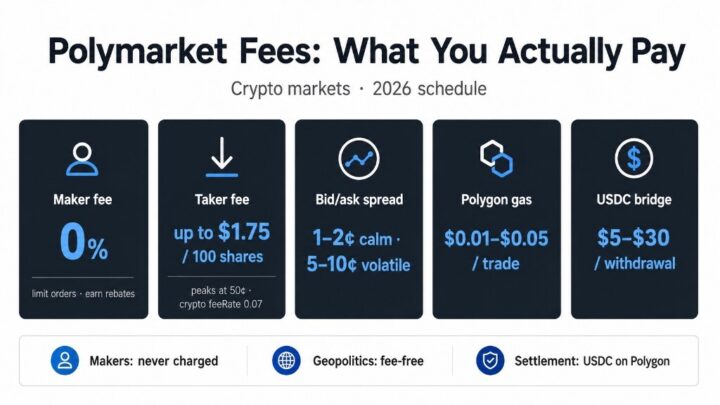
Polymarket is not free. Crypto UP/DOWN markets charge taker fees (makers are still free). Spread, Polygon gas, and being wrong at 80¢ are the rest of the bill. I keep the current numbers on Polymarket fees explained so this page does not go stale the next time the fee schedule moves.
A "how to win" process that ignores fees will look profitable in a spreadsheet and smaller in the wallet. Size and skip-rate have to survive the fee, not just the win rate.
How Winning Traders Think
Winning traders do not ask "where will Bitcoin go?" They ask "is this window better than a coin flip after fees, and is my size small enough that I can be wrong?"
They:
- Do not trade every market
- Do not chase 70–80¢ "sure things"
- Do not change size because of a streak
- Treat gut feeling as a reason to sit out, not a reason to click
Gut feeling is terrible at 15-minute data. It remembers the last candle, not the last 200 windows. Consistent rules beat a hot take. I would rather miss a window than invent a reason to be in it.
Where AI Actually Helps
AI does not "know" where Bitcoin is going. Used honestly, it is a skip filter: it looks at a lot of past 15-minute windows and tells you when the current one does not look like a coin flip.
That is useful for the "are odds still mispriced?" check. It is useless if you ignore size, martingale, and "trade every window." A probability feed on top of a bad process is still a bad process.
If you want that probability layer, Crypticorn's 15-minute and 1-hour UP/DOWN predictions are what we build. They do not guarantee wins. They are there to skip the windows where there is no edge.
Faq: how to Win on Polymarket
How do you win on Polymarket?
You win on Polymarket by running a process: pick a market you can actually trade (for me, BTC 15-minute and 1-hour UP/DOWN), skip most windows, size so one loss is boring, never double down, and do not buy odds that already moved. It is not a secret UP/DOWN call.
How do you win Polymarket Bitcoin UP/DOWN?
Bitcoin UP/DOWN pays $1 or $0 at resolution. Winning means your average win, after fees, beats your average loss over many trades. Being right on BTC's direction is not enough if you entered at 75¢ after the move or sized up after a loss.
Is there a Polymarket Bitcoin UP/DOWN strategy that works?
A strategy that works is a set of rules you can repeat: which horizon, when you sit out, how you size, and when you refuse a chase. My timing rules for 15-minute BTC are in the 5-minute strategy. This page is the rest of the stack. Nothing here is guaranteed.
Does timing matter more than direction on Polymarket?
On 15-minute BTC, timing often matters more than the directional opinion you walked in with. A correct UP call bought too late is still a losing trade. Timing is still only one module, size and skip-rate will wreck you even with perfect timing.
Should I trade every 15-minute Bitcoin market?
No. There are 96 a day. Most have no setup. Trading all of them is how a decent win rate turns into fees, tilt, and a smaller account.
Final Takeaway
How to win on Polymarket Bitcoin UP/DOWN, in one line:
A boring process beats a correct opinion.
- Pick the market (BTC, a horizon you can sit through) before you pick UP or DOWN.
- Skip most windows. No setup is a valid trade.
- Size so one loss does not change the next trade.
- Do not martingale. Doubling is not a recovery plan.
- Do not chase repriced odds. 70–80¢ "sure things" are often already done.
- Put timing in its own rule set, that is the 5-minute strategy, not this page.
The hub for the rest of the cluster is the Ultimate Guide to Polymarket crypto trading.
If you want a probability check for the "is this window even worth it?" question, our UP/DOWN predictions are here. Not to promise a win. To skip the ones that are noise.
Author: Johannes Thüroff, M.Eng. | Last updated: August 2026
Not financial advice. See Disclaimer.
Automate crypto prediction markets
New to crypto trading?
Further reading
Crypto Price Prediction
Polymarket Crypto Price Predictions: Crowd Odds vs AI Forecasts (2026)

Crypto Price Prediction
How Accurate Are AI Crypto Price Predictions? (2026)
Crypto Trading
Predict.fun vs Polymarket: The Honest Comparison (2026)
Crypto Trading
Ultimate Guide to Polymarket Crypto Trading (2026)
Crypto Trading
Polymarket Fees 2026: Taker Fees, Spread & Real Costs
Crypto Trading