If you’ve heard about Polymarket from a friend, a tweet, or a news story about election prediction markets, the next question is usually the same: is Polymarket legit, and is it worth using? I’ve been trading Polymarket crypto up/down markets daily for over a year, so this review is from the inside — what actually works, what’s annoying, and where I’d caution you.
I’m Johannes Thüroff, M.Eng., founder of Crypticorn. I trade 15-minute and 1-hour Bitcoin UP/DOWN markets on Polymarket almost every day. This is my honest Polymarket review for 2026, focused on the crypto side. Last updated: June 2026. Not financial advice.
Direct answer
Polymarket is legit — it’s a real, on-chain prediction market built on Polygon that pays out winning shares at $1 each, and in my experience withdrawals work (sometimes slowly). It’s worth using if you trade short-horizon crypto up/down markets and you’re comfortable with crypto-native workflows (USDC, a Web3 wallet, bridging). It’s not worth using if you’re in the US without a regulated intermediary, if you want sports or politics markets, or if you expect a polished, beginner-friendly, fiat-in/fiat-out app like Kalshi.
Key takeaways
- Legit & on-chain: Polymarket runs on Polygon, trades settle in USDC, winning shares pay $1. I’ve withdrawn real money — it works, with caveats.
- Best for: short-horizon crypto up/down trading (15min, 1h, 4h, daily) where you have an edge and don’t mind crypto-native UX.
- Worst for: US users without a regulated intermediary, sports bettors, political prediction hobbyists, anyone who wants fiat in/out.
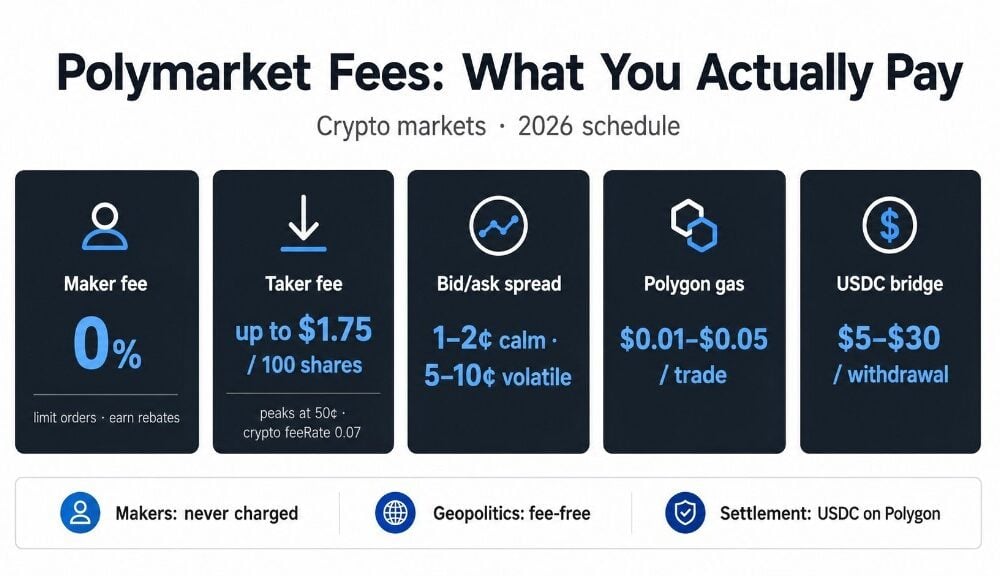
- Fees: since 2026, taker fees on crypto markets (up to $1.75 per 100 shares; makers free with rebates) — plus bid/ask spread, Polygon gas, and USDC bridging back to mainnet (~$5–30 per withdrawal).
- Regulatory status: Polymarket settled with the CFTC in 2022 and geo-restricts US users. Access via regulated intermediaries (Kalshi, VOdds) is the legal route for US traders.
- My verdict: a serious tool for crypto traders with an edge. Not a beginner-friendly gambling app.
What Polymarket actually is
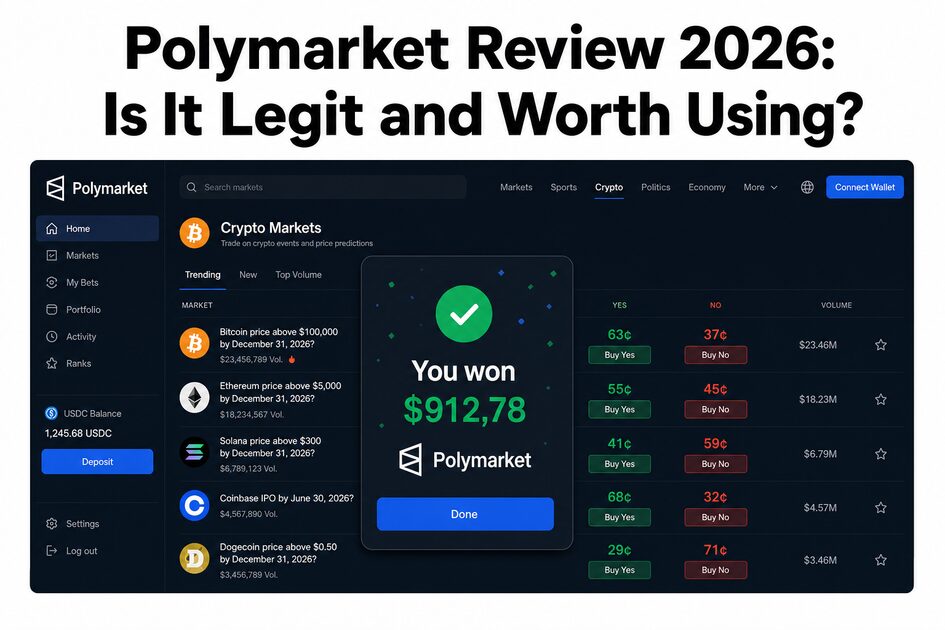
Polymarket is a decentralized prediction market built on the Polygon blockchain. Users buy “Yes” or “No” shares on real-world event outcomes — crypto price movements, elections, sports, culture. Each share pays $1 if its outcome happens, $0 if it doesn’t. The share price (e.g., 65¢ for “Yes”) reflects the market’s current implied probability (65%).
All trades settle in USDC on Polygon. You fund your account by bridging USDC from Ethereum mainnet (or another chain) to your Polymarket deposit address. You withdraw the same way in reverse. There’s no fiat on-ramp inside Polymarket.
For a deeper explainer, see what are prediction markets and how Polymarket Bitcoin odds actually work.
Regulation & safety
Polymarket’s regulatory history matters for whether you should use it. The key facts:
- January 2022: Polymarket settled with the US Commodity Futures Trading Commission (CFTC) for $1.4 million over offering binary options without proper registration. As part of the settlement, Polymarket geo-restricted US users.
- Today: Polymarket is accessible in most countries outside the US. US users accessing Polymarket directly via VPN violate Polymarket’s terms of service and risk account forfeiture.
- Regulated US access: US traders can access Polymarket liquidity through regulated intermediaries — Kalshi for fully regulated event contracts, or VOdds (a sports betting broker that integrated Polymarket) for some markets.
- Self-custody: funds in your Polymarket deposit address are controlled by your wallet’s private key. Polymarket can’t seize them — but if you lose your key, you lose your funds.
For a step-by-step guide to legal US access, see Polymarket vs Kalshi (regulated US alternative).
Fees (headline vs reality)
Polymarket ended its 0% era in 2026: crypto markets now carry taker fees (up to $1.75 per 100 shares at 50¢), while makers still trade free and earn rebates. Beyond the new fee, the real costs hide in four places:
- Bid/ask spread: the spread is the fee. On liquid 15-min BTC UP/DOWN markets, the spread is typically 1–2¢. On less liquid markets or during volatility, it widens to 5–10¢. A 5¢ spread on a 50¢ market is a 10% effective fee if you cross it.
- Polygon gas: usually $0.01–0.05 per trade. Tiny, but compounds if you’re placing many small trades.
- USDC withdrawal / bridge fees: bridging USDC from Polygon back to Ethereum mainnet costs $5–30 in gas depending on mainnet congestion. If you withdraw monthly, this is fine. If you withdraw after every winning trade, it eats your edge.
- Resolution risk: if a market resolves against you on a technicality (e.g., the resolution source disagrees with your interpretation), you lose the full position. This is rare but real.
For the full fee breakdown with real numbers, see Polymarket fees explained.
Withdrawal experience (first-hand)
Withdrawals on Polymarket are where the crypto-native UX shows its rough edges. In my experience:
- Fast when Polygon is quiet: a USDC withdrawal from Polymarket to another Polygon address confirms in seconds.
- Slow when bridging to mainnet: bridging USDC from Polygon to Ethereum mainnet takes 10–60 minutes depending on the bridge, plus mainnet confirmation time.
- US users have reported longer delays via the regulated intermediary route — withdrawal can take 1–3 business days at the intermediary layer, on top of the on-chain time.
- Cost varies wildly: I’ve paid anywhere from $3 to $28 to bridge a withdrawal to mainnet, depending on gwei at the moment.
Compared to Kalshi (which is dollar-in, dollar-out with instant ACH withdrawal), Polymarket’s withdrawal experience is the main UX weakness. It’s not broken — it’s just crypto-native, and that’s not for everyone.
Market coverage — what Polymarket is good (and bad) for
Polymarket’s market library is huge but uneven. My honest take after a year of trading:
Good for: short-horizon crypto up/down
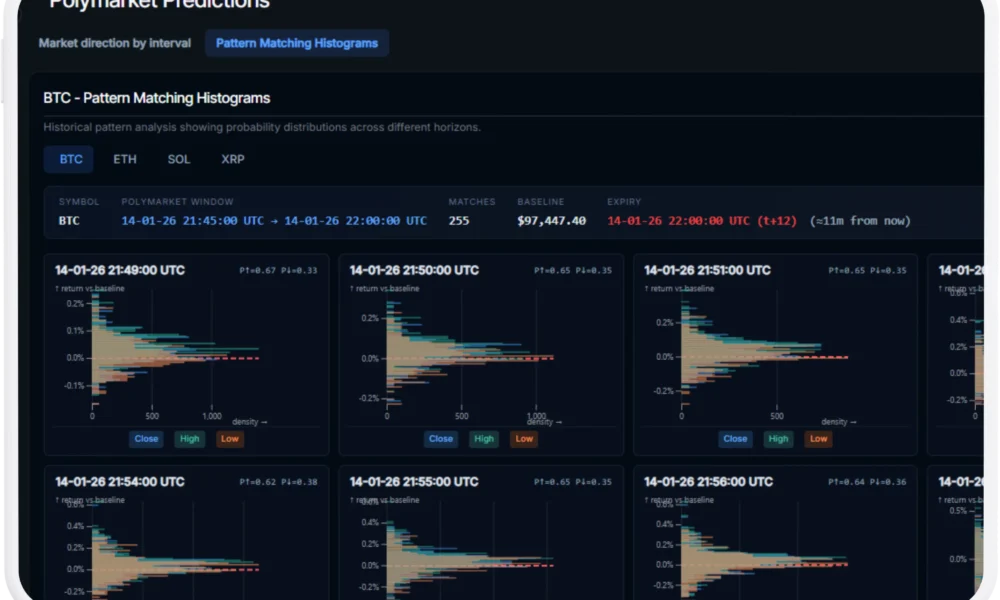
This is where Polymarket shines. The 15-minute, 1-hour, 4-hour, and daily BTC and ETH UP/DOWN markets have deep liquidity, tight spreads during normal conditions, and enough volatility to create real edges for traders who can estimate probability better than the crowd. This is where I trade, and where Crypticorn’s UP/DOWN predictions are built to help.
Okay for: weekly / monthly crypto price levels
Longer-horizon crypto markets (e.g., “Will BTC close above $X on date Y?”) have decent liquidity but slower price discovery. Fine for hedging or for traders with multi-day views.
Mixed for: politics and elections
Polymarket’s political markets (election outcomes, policy events) get the most press but are dominated by partisan money and whale positioning. Unless you have a real informational edge on a specific race, you’re trading against people with better information than you. I don’t trade these.
Bad for: sports betting
Polymarket’s sports markets exist but are thinly traded compared to sportsbooks. Spreads are wide, liquidity is shallow, and you’ll get better prices on a real sportsbook or Kalshi. If sports is your thing, Polymarket isn’t.
Bad for: beginners
If you’ve never used a Web3 wallet, never bridged tokens, and don’t know what USDC is, Polymarket is not where you should start. The onboarding is fine for crypto-natives but brutal for first-timers. Kalshi is the better beginner choice for US users; for non-US users, spend a weekend learning MetaMask + Polygon first.
What Polymarket is NOT
- Not a sportsbook. Sports markets exist but are secondary.
- Not a casino. No slots, no roulette — only event contracts.
- Not an exchange for spot crypto. You’re trading event outcomes, not buying BTC.
- Not regulated in the US. Direct access from the US violates Polymarket TOS.
- Not a guaranteed money printer. Anyone who tells you Polymarket is “easy money” is selling you something — usually a martingale bot. (See why martingale fails on Polymarket.)
My verdict after a year of trading Polymarket
Polymarket is a serious tool for traders with a real edge. It is not a beginner-friendly gambling app, and it is not a substitute for Kalshi if you’re a US user who wants a regulated fiat experience. The crypto up/down markets — especially 15-minute and 1-hour BTC — are where I focus, and where I think Polymarket is genuinely the best product on the market.
Two things would make me rate it 5/5 instead of 4/5: faster/cheaper USDC bridging back to mainnet, and a clearer regulatory path for US users. Both are solvable in time.
If you trade crypto up/down and you’re not in the US, Polymarket is worth your time. If you’re in the US, use Kalshi or VOdds. If you want sports, use a sportsbook. If you want politics, know your edge before you bet.
FAQ: Polymarket review 2026
Is Polymarket legit?
Yes. Polymarket is a real, on-chain prediction market built on Polygon. Trades settle in USDC, winning shares pay $1, and withdrawals work — though the user experience is crypto-native and not beginner-friendly. Polymarket settled with the CFTC in 2022 and now geo-restricts US users; it operates legally in most other jurisdictions.
Is Polymarket safe to use?
Polymarket is safe if you follow basic crypto hygiene: use a hardware wallet or trusted software wallet, never share your seed phrase, and bridge funds only from wallets you control. Funds in your Polymarket deposit address are self-custodied — Polymarket can’t seize them, but you also can’t recover them if you lose your key. The platform itself has not been hacked as of June 2026.
Is Polymarket legal in the US?
Direct access to Polymarket from the US violates Polymarket’s terms of service following its 2022 CFTC settlement. US users can access Polymarket liquidity legally through regulated intermediaries like Kalshi (fully CFTC-regulated event contracts) or VOdds (a sports betting broker that integrated Polymarket). Using a VPN to access Polymarket directly from the US risks account forfeiture and is not recommended.
Does Polymarket pay out real money?
Yes. Winning shares resolve to $1 each in USDC on Polygon. Withdrawing to a bank account requires bridging USDC to Ethereum mainnet, then sending to an exchange (Coinbase, Kraken, etc.) and selling to fiat. The end-to-end process works but costs $5–30 in bridge gas plus exchange fees, so batch your withdrawals rather than withdrawing after every winning trade.
Is Polymarket worth using in 2026?
Polymarket is worth using in 2026 if you trade short-horizon crypto up/down markets and you’re comfortable with crypto-native UX. The 15-minute and 1-hour BTC UP/DOWN markets are where Polymarket has the deepest liquidity and the tightest spreads. It is not worth using if you’re in the US without a regulated intermediary, if you want sports betting, or if you expect a polished fiat-in/fiat-out app.
How does Polymarket compare to Kalshi?
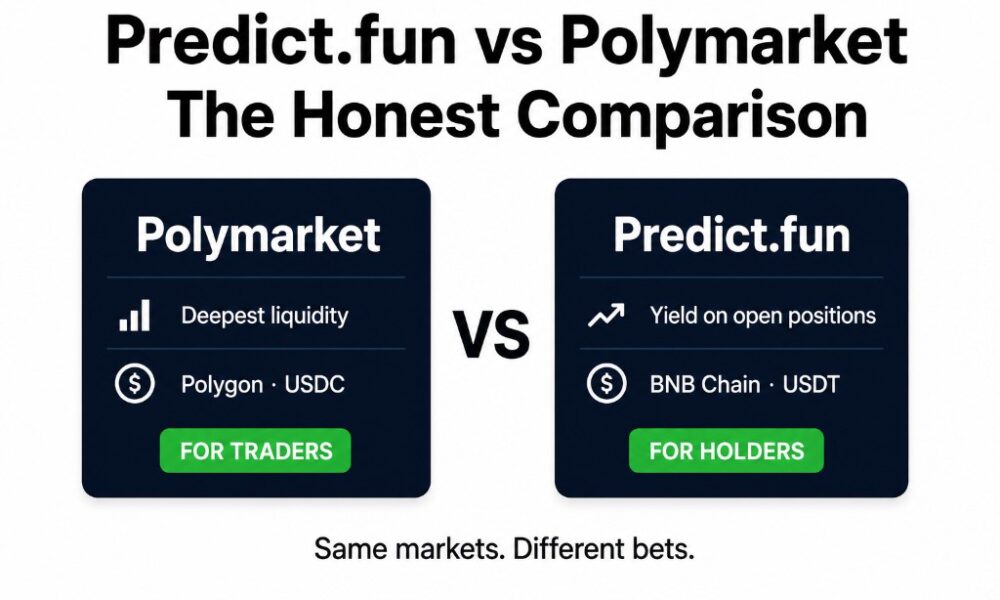
Polymarket is crypto-native (USDC on Polygon, self-custody; since 2026 crypto taker fees up to $1.75 per 100 shares, makers free) with real costs in spread and gas. Kalshi is fiat-native (USD, ACH withdrawals, CFTC-regulated, per-contract fees but simpler UX). Polymarket has deeper liquidity on crypto up/down markets; Kalshi has broader coverage of regulated event contracts. For US users, Kalshi is the legal choice. For non-US users trading crypto, Polymarket is usually better. See Polymarket vs Kalshi 2026 for the full comparison.
Can beginners use Polymarket?
Polymarket is not beginner-friendly. You need to understand Web3 wallets (MetaMask, Rabby, Phantom), USDC, and Polygon bridging before you can deposit. If you’ve never used a crypto wallet, expect a weekend of learning before your first trade. For beginners in the US, Kalshi is the easier on-ramp. For beginners outside the US, learn the crypto basics first, then come back to Polymarket.
Final takeaway
My Polymarket review after a year of daily trading:
- Legit — real on-chain prediction market, real payouts, real withdrawals (with crypto-native friction).
- Best for short-horizon crypto up/down trading where you have an edge.
- Not for US users without a regulated intermediary, sports bettors, beginners, or anyone expecting fiat UX.
- Fees are 0% on paper but real in spread, gas, and bridge costs.
- Regulatory path for US users runs through Kalshi or VOdds, not direct access.
If you trade Polymarket crypto up/down and want a probability edge instead of guessing, that’s what we build at Crypticorn — our AI-based UP/DOWN predictions are here. Not to guarantee wins, but to skip the trades where there’s no edge.
Author: Johannes Thüroff, M.Eng. | Last updated: June 2026
Not financial advice. See Disclaimer.