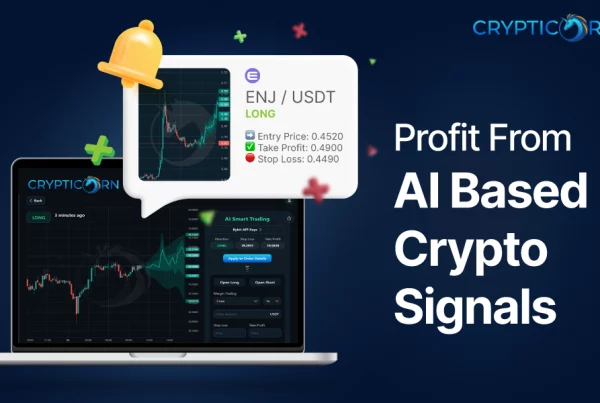
Crypto futures let you express a view on price with leverage and two-way direction—but the same tools that amplify gains can liquidate an account fast. Here is how we think about futures, why AI-generated signals help us time entries and exits, and what we watch before sizing a trade.
Last updated January 9, 2023.

What crypto futures are
A futures contract is an exchange-traded agreement sized in a coin or index. You are not debating spot delivery in your head—you are managing margin against a mark price and a liquidation ladder. Most retail crypto “futures” today are perpetual swaps: no fixed expiry, funding bridges spot and perp.

Long versus short
Long positioning expresses upside: you lose if price trends against you and margin thins. Short positioning expresses downside: you profit when the contract’s mark falls, but squeezes hurt just as much as bull runs if you are out of room on margin.
Why traders bother with futures
- Leverage—you post collateral once and control a larger notional; the venue scales p&l faster than spot.
- Liquidity—busy perp books often print tighter depth around the index than thin alt spot markets.
- Hedging—if we already hold spot inventory, a measured short perp can dampen delta without dumping the wallet.
Risks we refuse to gloss over
- Volatility—crypto gaps or funding spikes can move mark through a stop cluster in minutes.
- Counterparty and venue risk—exchange maintenance, API halts, or socialized loss mechanisms still exist even after all the marketing.
- Leverage blow-ups—raising size to “make back” a loss is how dashboards go to zero.
What we mean by crypto futures signals
A futures signal is simply a structured hypothesis: direction, entry zone, risk point, and time horizon. We blend tape structure, positioning data where available, and model output—then we publish the packet so you can decide whether it fits your margin and fee schedule.
Signals are not personalized advice. Use them as a checklist, then layer your own exchange rules, tax handling, and sleep schedule.
Trading futures signals with our AI workflow
Our AI stack tries to answer two questions retail groups skip: where to enter and when the thesis expires. Many Telegram blurbs stop after the entry; we publish exit guidance because funding and volatility eat stagnant positions.
As of early 2023 we sized many predictions around a six-hour cycle—holding longer is fine mechanically, but the model’s assumptions reflected that window. Size down if you intend to drift past the stated horizon.
You can review our live futures package here: AI futures signals.

Final takeaway
Futures are useful when you respect margin math and treat leverage as a dimmer, not an on/off switch. Pair exchange-grade risk limits with signals that spell out entries and exits, then paper-trade anything that feels unfamiliar before committing real collateral.