
Polymarket vs Kalshi Crypto Predictions: 2026
Polymarket VS. Kalshi: Crypto Up/Down Predictions for 2026
Which One Is Better for Trading Crypto in 2026?
If you’re trading crypto prediction markets, you’ve probably noticed something interesting:
Two platforms dominate the conversation right now:
Both offer crypto-related prediction markets.
Both show probabilities instead of charts.
Both look similar at first glance.
But once you actually try to trade them, the differences become very obvious — especially if you care about short-term moves.
I’ve used both, and in this article I’ll break down:
-
how Polymarket and Kalshi handle crypto predictions
-
what kind of trader each platform is best for
-
and why 15-minute markets change everything
Polymarket vs Kalshi: A Comprehensive Comparison
1. Platform Overview
- Polymarket is a decentralised prediction market built on blockchain (Polygon), allowing users to trade on the outcomes of real-world events using USDC (a stablecoin). It’s globally accessible (with some restrictions), and is known for its speed, variety of markets, and low fees. Polymarket does not require KYC for international users, but US access has been restricted until late 2025, with a regulated US version launching soon. [polytrackhq.app], [betmetricslab.com], [vegasinsider.com]
- Kalshi is a US-based, CFTC-regulated event contract exchange. It allows users to trade on future events using USD, with a focus on economics, politics, weather, and sports. Kalshi operates under strict US regulatory oversight, requires KYC, and is accessible only to US users. [polytrackhq.app], [betmetricslab.com], [vegasinsider.com]
2. Key Differences
| Feature | Polymarket | Kalshi |
|---|---|---|
| Platform Type | Decentralised, blockchain-based | Centralised, CFTC-regulated |
| Currency | USDC (crypto) | USD (fiat) |
| Regulation | Outside traditional finance, global focus | Fully regulated in the US |
| KYC | No (international), Yes (US) | Yes |
| Fees | 0% trading fees (international), 0.01% (US) | ~1.2% per contract, $2 withdrawal fee |
| Market Access | Restricted in some countries, US re-entry | US only |
| Market Topics | Politics, crypto, sports, culture, etc. | Politics, economics, weather, sports |
| Trading Mechanism | Peer-to-peer, on-chain settlement | Centralised order book |
| Mobile App | Web-based | iOS & Android |
3. Fees and Liquidity
- Polymarket is significantly cheaper for high-volume traders, with almost zero trading fees and minimal blockchain transaction costs. For example, $10,000 in trades would cost $1 on Polymarket versus $120 on Kalshi. Liquidity is strong, especially in global and crypto-related markets.
- Kalshi charges higher fees but offers higher liquidity in US-centric markets, especially sports. It is the market leader in trading volume, with over 60% market share as of late 2025. Read more about Polymarket VS. Kalshi here.
4. Regulatory Status
- Polymarket operates outside traditional financial regulation but is moving towards compliance, especially with its US relaunch. It was previously fined by the CFTC and has since worked to address regulatory concerns. Read more here.
- Kalshi is fully regulated by the CFTC, providing enhanced transparency and security for US users. It has faced legal challenges but remains the only federally regulated event contract market in the US. Read more here.
5. User Experience and Market Focus
- Polymarket is ideal for users comfortable with crypto wallets and those seeking a wide variety of markets, including niche and global events. It appeals to a more international, tech-savvy audience.
- Kalshi is best for US-based users who prefer traditional banking, regulatory oversight, and high liquidity in mainstream topics like sports and politics.
6. Growth and Outlook
- Both platforms have seen explosive growth, with Kalshi leading in US market share and Polymarket expanding globally and preparing for a major US relaunch. Each is backed by significant venture capital and partnerships. You can read the full article here.
Polymarket Crypto Predictions (15-Minute Markets)
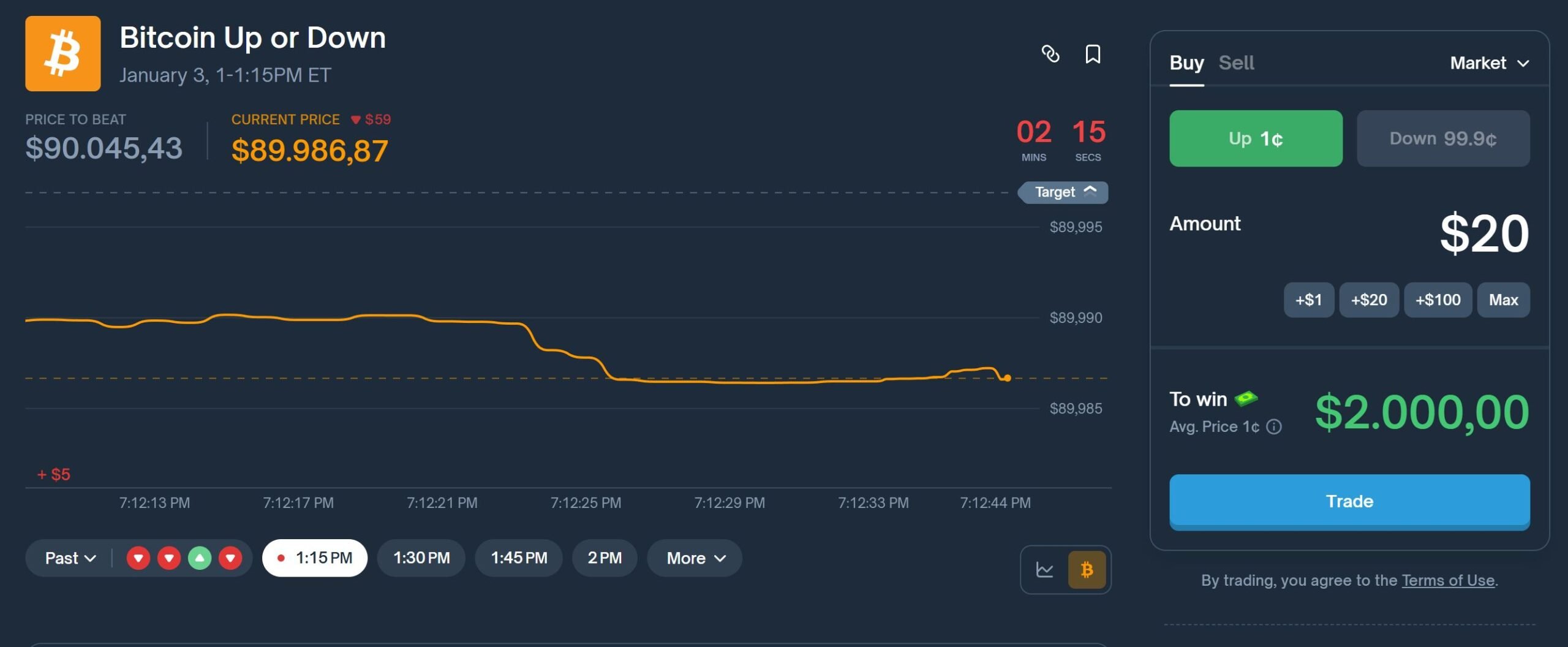

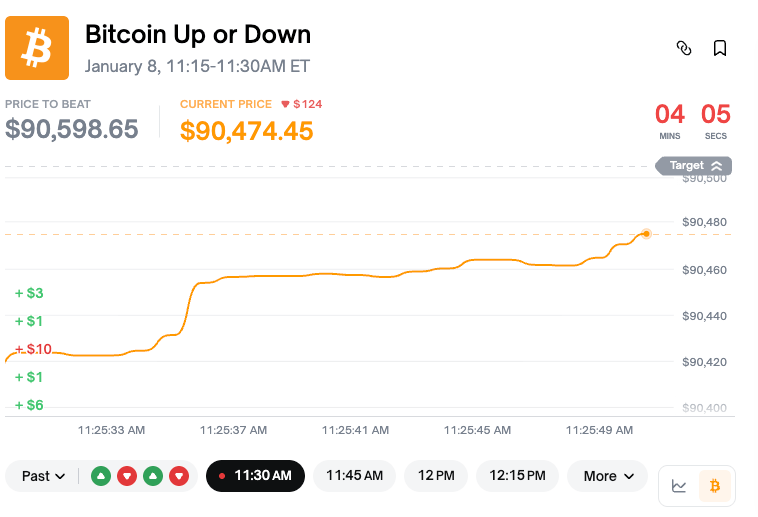
Polymarket’s crypto section is built around short-term prediction markets.
The most popular ones are:
-
Bitcoin UP or DOWN – 15 minutes
-
Ethereum UP or DOWN – 15 minutes
-
Solana, XRP, and other majors
These markets refresh constantly and resolve fast.
What Polymarket Does Well
1. 15-minute resolution
This is the biggest differentiator.
Instead of waiting an hour or longer, you get:
-
fast feedback
-
more opportunities
-
less overnight risk
For active traders, this matters a lot.
2. Clean UP / DOWN structure
Each market is simple:
-
Up
-
Down
-
fixed resolution time
No ranges, no complex wording.
This makes it easy to:
-
size positions
-
evaluate risk quickly
-
compare probabilities across assets
3. Crowd-driven probabilities
Polymarket prices move quickly based on:
-
order flow
-
sentiment
-
momentum
This creates mispricings, especially during emotional moves — which is exactly where short-term traders find edge.
Downsides of Polymarket
To be fair, Polymarket also has weaknesses:
-
very fast markets → emotional trading
-
crowd can overreact
-
probabilities can flip sharply near resolution
If you trade purely on gut feeling, Polymarket can be brutal.
Kalshi Crypto Predictions (Hourly Markets)

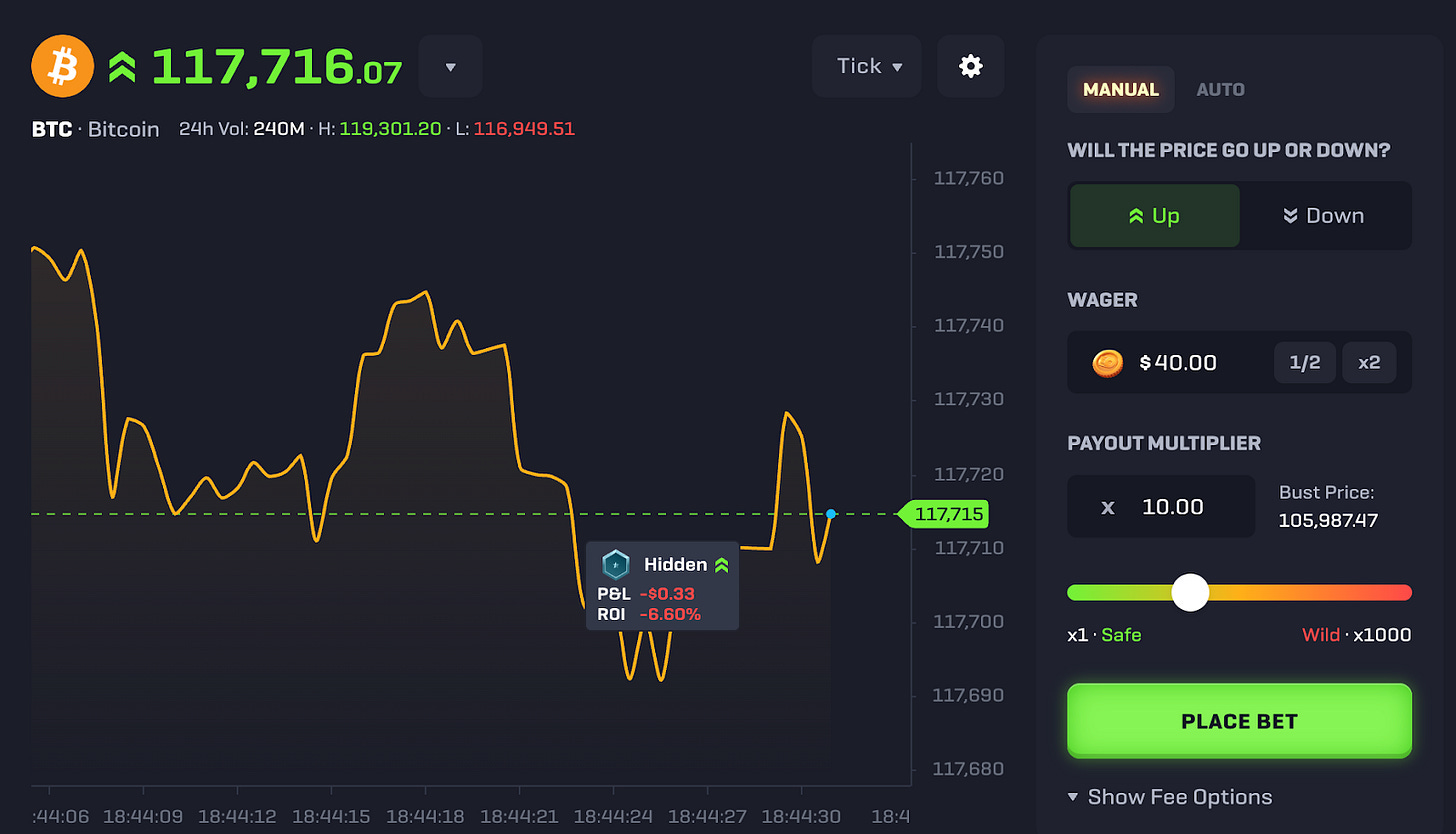

Kalshi’s crypto section looks different — and behaves differently.
Instead of UP/DOWN every 15 minutes, Kalshi mostly offers:
-
hourly markets
-
price level questions
-
price range questions
For example:
-
“Bitcoin price today at 6pm EST?”
-
“Will SOL be above X at 6pm?”
What Kalshi Does Well
1. Regulated structure
Kalshi is a regulated US prediction market.
That means:
-
clear rules
-
standardized contracts
-
strong compliance
For some traders, this is a big plus.
2. Less noise
Hourly markets move slower.
There’s:
-
less micro-volatility
-
fewer emotional flips
-
more time to think
This suits traders who don’t want fast decisions.
3. Range-style markets
Kalshi often offers multiple outcomes:
-
price ranges
-
multiple thresholds
These can be useful for:
-
directional bias
-
macro-style views
-
structured exposure
Downsides of Kalshi
For active crypto traders, the downsides are important:
-
no 15-minute markets (yet)
-
less frequent opportunities
-
range markets dilute conviction
-
slower feedback loop
If you’re used to trading short-term crypto moves, Kalshi can feel too slow.
Polymarket vs Kalshi: Side-by-Side
| Feature | Polymarket | Kalshi |
|---|---|---|
| Shortest timeframe | 15 minutes | 1 hour |
| Market type | UP / DOWN | Price / Range |
| Speed | Very fast | Slower |
| Regulation | Crypto-native | US-regulated |
| Best for | Active traders | Macro / slower traders |
| Emotional swings | High | Lower |
Which Platform Is Better?
It depends on how you trade.
Polymarket is better if you:
-
trade short-term crypto moves
-
want frequent opportunities
-
are comfortable acting quickly
-
want clean UP/DOWN decisions
Kalshi is better if you:
-
prefer hourly or longer views
-
like structured range markets
-
want regulation-first platforms
-
trade fewer markets
Why 15-Minute Markets Are a Big Deal
Here’s the part most people underestimate.
Short-term crypto markets behave very differently from hourly ones:
-
momentum matters more
-
emotion matters more
-
reactions are faster
-
probabilities shift constantly
Human intuition struggles here.
That’s why probability-based tools like Crypticorn’s AI up/down predictions become far more useful on Polymarket than on slower platforms.
Where Crypticorn Fits In
Because Polymarket’s 15-minute markets move so fast, the biggest edge isn’t speed — it’s filtering.
Knowing:
-
when probabilities are basically random
-
when the crowd is overreacting
-
when UP or DOWN is statistically favored
is far more powerful than guessing.
That’s exactly what we focus on at Crypticorn.
-
AI-based UP/DOWN probability predictions
-
designed specifically for short-term Polymarket crypto markets
-
no trading automation
-
no wallet access
-
just clearer decision-making
Final Thoughts on: Polymarket vs. Kalshi in 2026
Polymarket and Kalshi are both strong platforms — but they serve very different traders.
Kalshi feels like:
“Where will price be later?”
Polymarket feels like:
“What happens next?”
If you’re trading short-term crypto moves, that difference matters more than fees, branding, or regulation.
And once markets resolve every 15 minutes, probability beats intuition every time.


