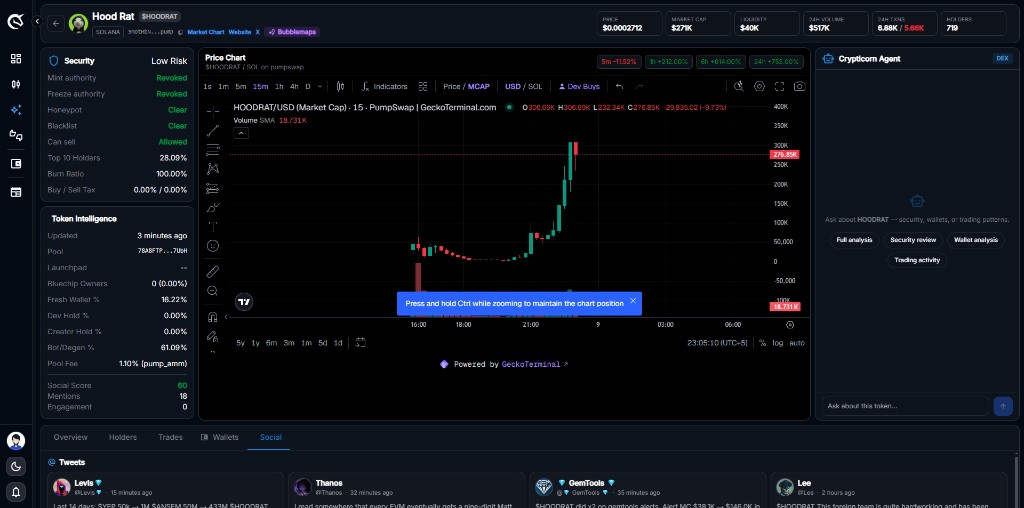
I build on-chain analytics at Crypticorn. On DEX tokens, the chart is often the distraction. The holder table is where rugs become visible before price collapses. This guide is how I read holder data, what wallet labels actually mean, and where those labels lie to you.
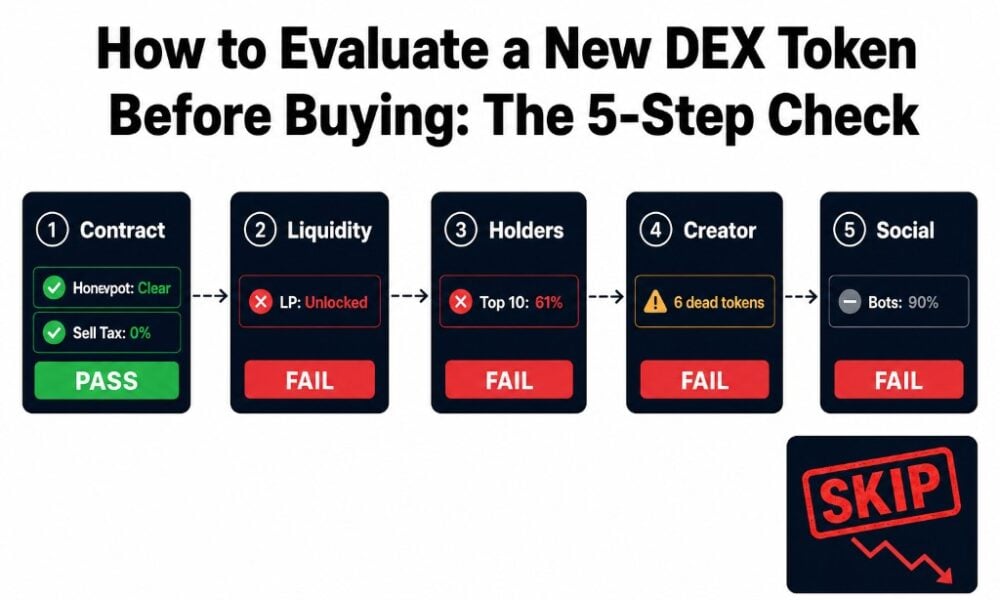
For the full pre-buy funnel (contract, liquidity, holders, creator, social), use the 5-step DEX token checklist. For why holder context beats CEX-style indicators on new pairs, see DEX trading signals.
Last updated: August 2026. Not financial advice. See our disclaimer.
Direct answer
Holder analysis is reading who owns a token, how concentrated supply is, and whether wallets look organic or staged. On DEX launches, you check top-holder share (excluding pool and burn addresses), clusters of fresh wallets funded from one source, dev or creator allocations still moving, and sniper-heavy early supply. Tools may label wallets as “smart money,” “whale,” or “bundler.” Treat labels as heuristics, not proof. A clean holder read does not guarantee profit; a bad holder read guarantees you are optional exit liquidity.
Key takeaways
- Concentration is control: if a small set of wallets owns most circulating supply, price is a permission slip they grant.
- Fresh-wallet clusters are a classic rug signal: many new wallets funded together before launch, buying in sync, rarely happens organically.
- Dev wallets ≠ team transparency: deployers split supply across addresses; track net outflows toward pools and CEX bridges.
- “Smart money” labels are lagging and gameable: useful filter, not a buy signal.
- Snipers are holders too: early bot wallets often define the first hours of supply and sell pressure.
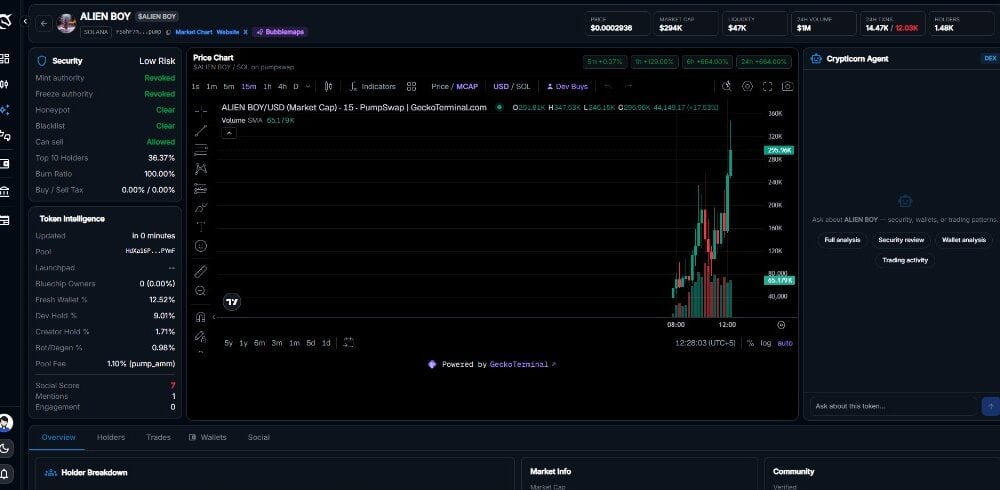
- Crypticorn DEX AI compresses holder breakdown, wallet labels, and security context on supported chains (see product page for current coverage). It flags more tokens than it clears by design.
Holder signals at a glance
| Signal | What you are measuring | Yellow flag (investigate) | Common false positive |
|---|---|---|---|
| Top-10 concentration | Combined % held by largest non-pool, non-burn wallets | roughly >20-30% combined on a micro cap | Team vesting wallets labeled as single entities |
| Single whale | One wallet >5% of supply (non-pool) | Unknown wallet with no prior history | Known treasury or CEX hot wallet miscounted |
| Fresh-wallet cluster | Many new wallets funded from same parent, buying early | 5+ wallets, same funding path, pre-launch timing | Airdrop claim batches (check claim contract) |
| Dev/creator outflow | Deployer-linked wallets sending to pools/bridges | Steady sells into rising price | Planned unlock schedule (rare on memecoins) |
| Sniper share | Early-block buyers holding large slice | High % still held after first hour | Fair launch with heavy bot competition only |
| Holder count vs liquidity | Unique holders relative to pool size | 100 holders, $8k liquidity (exit risk) | New but genuine community token (still risky) |
Step 1: Clean the holder list (pool, burn, contracts)
Before math, remove addresses that are not economic holders:
- Liquidity pool (LP) contract: holds tokens backing the AMM pair. Not a person.
- Burn / dead addresses: supply sent to 0x…dead reduces float but is not a trader.
- Token contract and staking vaults: can look like whales; read the contract tab.
- CEX deposit wallets: on EVM explorers, labeled exchange wallets are distribution, not insiders (when labeled correctly).
On Etherscan and Solana equivalents, export or sort holders manually. Analytics tools automate exclusions; manual readers skip this step and panic at the LP holding 40%.
Step 2: Read concentration without fooling yourself
After exclusions, ask two questions:
- Who can move price 10% in one sell? Any wallet with meaningful float relative to daily volume.
- How many independent actors remain? Ten wallets at 3% each is different from one wallet at 30%.
Working rules for new DEX micro caps (not law, just filters I use):
- Top 10 non-pool wallets >30% combined → high control risk
- Any single mystery wallet >5% → find funding source before sizing up
- Holder count under ~200 with sub-$50k liquidity → treat exits as fragile
Compare to liquid majors: thousands of holders and deep pools mean concentration matters differently. DEX memecoin holder analysis is its own sport.
Step 3: Fresh wallets, bundlers, and coordinated entries
The classic insider pattern: fund 10-30 fresh wallets from one parent, buy in the first blocks, promote on X, distribute to retail, sell into volume. Explorers show wallet age; good tools cluster by funding path.
Bundlers (in analytics slang) are wallets that bought in the same block or bundle as the deployer flow. Not every bundler is malicious, but heavy bundler share on a hyped launch is a sell-pressure overhang you should name before entry.
Manual check: pick the top five non-pool buyers, open each wallet, sort by first transaction date. If ages are identical and funding traces to one hot wallet, you have coordination.
Step 4: Dev, creator, and “team” wallets
Deployer address is public. Insiders rarely hold everything there. They split across secondary wallets, move to multisigs, or route through privacy tools. Holder analysis means tracking net outflow, not just initial allocation.
- Dev wallet sends large tranches to the LP → potential rug pull setup (especially if LP not locked)
- Dev wallet sends to known bridge or CEX deposit → distribution starting
- Many small transfers to fresh wallets → possible airdrop bait or wash volume prep
Creator context belongs in the same session: what tokens this deployer launched before, how those charts ended. Our checklist covers that in step 4 (creator history). Holder analysis without deployer history is half a picture.
Step 5: What “smart money” labels really mean
Analytics platforms tag wallets that were early to past winners or show positive historical PnL. Crypticorn’s DEX AI surfaces categories such as smart money, snipers, whales, fresh wallets, and bundlers alongside largest holders (exact labels depend on chain coverage and data availability).
Honest limits:
- Lagging: a wallet looks smart until the next trade zeros it.
- Gameable: teams buy through “clean” wallets to attract copy traders.
- Not causal: smart money holding does not mean the token is safe; insiders can be smart and malicious.
Use labels to prioritize which wallets to inspect manually, not to skip contract and liquidity checks.
Step 6: Snipers as holders (time dimension)
Sniper bots often appear among top holders minutes after launch. If sniper wallets still hold a double-digit share of float, your trade thesis includes their exit timing. I treat heavy sniper retention like a hidden sell wall that activates on volume spikes.
Snipers are not always villains; on fair launches they are competition. For you, the question is unchanged: who still holds enough to move price against you?
Manual workflow vs DEX AI (what we built)
Manual path (free): explorer holder tab → filter pool/burn → inspect top wallets → trace funding → read deployer history → scroll X for bot farms. Budget 15-30 minutes per token if you do it properly.
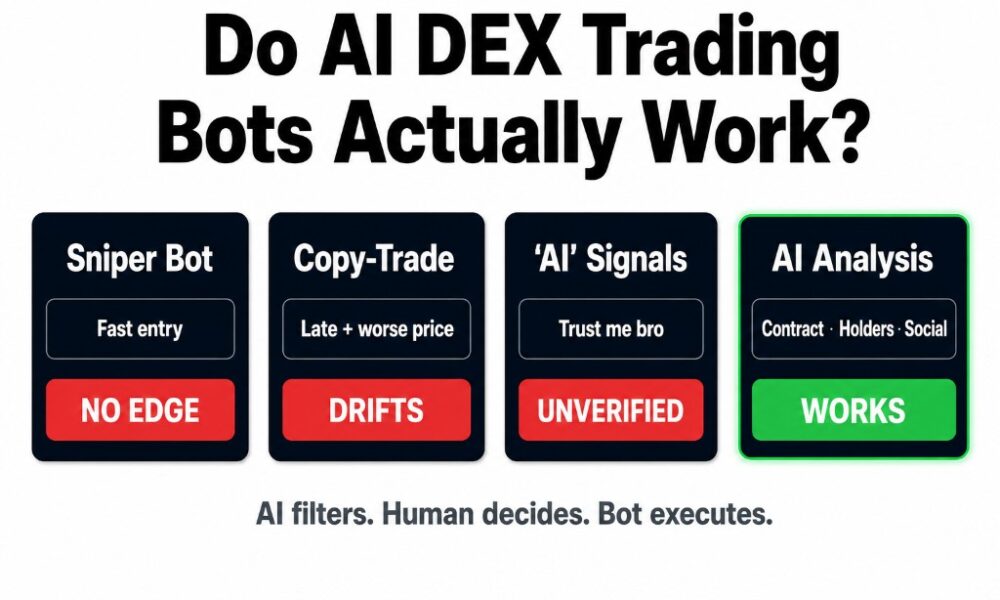
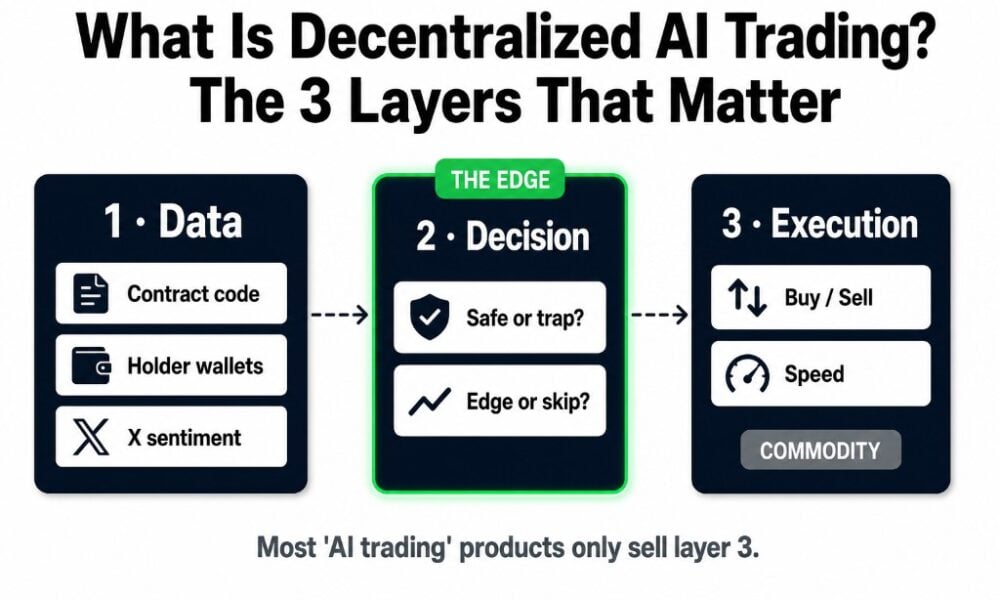
Crypticorn DEX AI runs the same layers in seconds on supported tokens: security review, holder breakdown with wallet labels, creator context, and live social signal. The output pattern we aim for: most tokens fail at least one check. If your tool clears everything, it is probably selling you speed, not safety.
We do not predict which token pumps next. We reduce the set of tokens that fail basic holder and contract hygiene before you sign a swap.
Holder analysis on CEX-listed tokens (short note)
CEX order books hide wallet-level holders; you see aggregated depth, not on-chain distribution. Holder analysis in this guide is primarily a DEX/on-chain skill. For venue choice, read DEX vs CEX trading (2026).
Final takeaway
Holder analysis answers one question: who can hurt you if they sell, and do they look coordinated? Concentration, fresh-wallet clusters, dev outflows, and sniper overhang are readable before the chart tells a story. Labels help you scan faster; they do not replace skepticism. When in doubt, skip. Missing a pump beats being someone else’s exit liquidity.
FAQ
What is holder analysis in crypto?
Holder analysis is reviewing who owns a token, how concentrated supply is, wallet ages and funding paths, and whether large holders can dump on the market. On DEX tokens it is a core due-diligence step before buying.
What is a good holder distribution for a new token?
There is no perfect number, but on micro-cap launches I want broad distribution: many holders, no single mystery wallet above roughly 5%, and top 10 non-pool wallets below roughly 20-30% combined. Thin liquidity with few holders is fragile even if concentration looks okay.
What are fresh wallets in token analysis?
Fresh wallets are newly created addresses, often funded from a parent wallet shortly before a token launch. Clusters of fresh wallets buying early together suggest coordinated insider accumulation rather than organic retail flow.
Can smart money wallet labels be trusted?
They are useful heuristics, not guarantees. Labels reflect past behavior and vendor rules; teams can game them, and past PnL does not prove future honesty. Always combine labels with contract, liquidity, and creator checks.
How do sniper bots show up in holder data?
Sniper wallets typically appear among the earliest buyers and may hold a large share of supply minutes after launch. If they retain significant float, their exits can dominate short-term price action.
Is holder analysis enough to avoid rugs?
No. Rugs also hide in contract permissions, unlockable liquidity, and social manipulation. Holder analysis is one layer in a stack. Use the full five-step checklist before sizing a DEX buy.
How does Crypticorn help with holder analysis?
Crypticorn DEX AI provides automated holder breakdowns with wallet labels, concentration metrics, and related security context on supported chains. It is designed to filter out high-risk tokens quickly, not to promise winning picks.